You know that feeling when you wake at 2am, and you remember you were supposed to have done something for marketing? You’re not alone.
As businesses grow past the start-up phase, marketing can’t survive as a part-time job or an enthusiastic role filled by someone doing their best – often you, the owner.
At a certain stage, what’s missing isn’t effort. It’s leadership.
That’s what I see, all the time.
A growth business hits $2–$5 million in revenue. The founder (yes, that’s you) is stretched. Marketing has been “handled” or “owned” or “managed”. Sometimes by you. Sometimes by an administrator. Sometimes by someone who said, “I like marketing, I’ll take that on.”
There’s activity.
You’ve got some social posts.
You’ve tried a campaign.
Maybe you’ve dabbled in Google Ads.
The website could have had an update.
There are good ideas floating around.
But growth is a key goal of the business. And marketing needs to be used deliberately to achieve that growth.
So here’s the real question: Who is going to own and lead this function when there is no senior leadership member at the table wearing that hat?
That’s the shift.
The hidden gap in growing businesses
Here’s what I see typically happening:
The founder still approves everything.
Marketing gets done, in bursts.
Sales and marketing aren’t properly aligned.
There’s no 12-month plan.
No clear prioritisation or rhythm.
What happens? Marketing becomes reactive. And when we’re reactive, in any area of our business, it never builds momentum. We jump, we respond, and sometimes we panic. But it doesn’t drive things forward consistently.
The marketing ball gets dropped
Now, this isn’t a criticism. No one is intentionally forgetting about marketing. It’s not about incapability. It’s a structural issue.
When marketing sits with you, the owner of the business, it competes with:
Operations
Hiring
Finance
Client delivery
Firefighting
And when things get busy? Marketing drops.
Not because it doesn’t matter. Because your attention is finite.
You cannot sustainably grow a business where marketing only happens when there’s spare capacity.
Consistency is key. We need a consistent pipeline. Consistent positioning. And consistency with ideas and implementation.
What changes when marketing has ownership
When marketing has senior oversight, a few things shift quickly. Not just for you, by removing one of the many hats that you wear as an owner, but for the whole business and team.
Clarity improves: We have a clear plan, and someone is driving it.
Decisions speed up: Said plan helps with decisions
We see results: Work is delivered, reported on, and reviewed
Marketing stops being an “extra” and starts acting like a lever for growth.
There’s direction.
There’s prioritisation.
There’s accountability.
There’s cadence.
The real question
So, you’re a business owner, reading this and thinking…
Why am I still wearing the marketing hat in my business?
Can I actually use marketing to drive real commercial results?
What’s the best way to take ideas from my team and make them happen?
Sounds like it’s time to take off the marketing hat.
Marketing can and should support the growth goals you have for your business. If it’s time for that function to have real ownership, let’s talk.
Frequently asked questions
When should a founder stop doing their own marketing?
When marketing only happens if you personally drive, and it drops when operations get busy.
Do I need a full-time marketing manager to fix this?
Not usually. A Fractional CMO brings senior marketing leadership to help drive a growing business, often before another full-time salary staff member is required.
What’s the risk of leaving marketing with the owner?
Inconsistent momentum, reactive decisions, and growth that plateaus quietly rather than dramatically.
Jacqui Gage-Brown
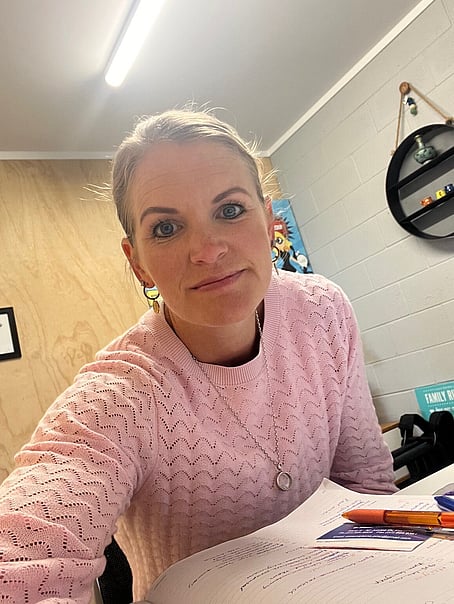
📷 One key planning habit for me is the use of a diary, especially when everything is always competing for your attention.